The Art Exchange: Update and THANK YOU Maine Schools
I have received e-mails from both of the art teachers involved with student art exchange updating me on how the work is coming. Sharon McCormack wrote and told me that the art would be done by the end of the week and that there is a “whole variety of art that is being offered up to you” She described a variety of wonderful projects that the students have worked on and will be finished, organized and packed away for me the end of the week. I won’t do any descriptions until I get to see them myself (like to keep it a surprise) and I will post some examples on the blog. She will be scanning some of the art work to post on her own Jordan acres website and will be sending the files to as well. She added that she was mindful of keeping the projects light so as keep room to also pack some additional supplies such as watercolor pencils and other things that I can bring. I will be happy to bring the art which I can’t wait to see, but also look forward to being able to stock an “art closet” between my donated supplies from Blick Art and the ones that Jordan Acres students have packed for me.
I also heard from Bec Poole at Brookesville Elementary School this week. In addition to describing to me the art her 7th and 8th grade students have been working on, which sounds incredible, she also described the enormous impact that viewing a DVD about Nyumbani , AIDS orphans and the conditions in the Kibera slum has had upon them. She wrote “The whole school is excited about this project”. She also asked that I keep in mind when I am in Kenya what other ways they might be involved in supporting the orphanage because that has become very important to them, with her own comment “Isn’t this exciting!” That it is! If there were anything that I could have hoped for in imagining an art exchange like this, it was that young people here would be affected by this and would develop a connection to what’s happening to kids across the world. I hoped it might happen when I returned with art and photos and video from the orphans in Kenya. I didn’t expect it would happen so soon. What a gift! I will surely find a way to keep this wonderful bond growing.
Thank you Maine students; you have already exceeded my hopes and expectations. I can’t wait to see your art work and especially I can’t wait to share it and the good will that goes with it in Kenya.
Gratitude revisited and passion discovered….a reflection
I haven’t posted for awhile since a bout with some rib pain threw me entirely off course and into a state of true fear about a cancer recurrence. Everything is fine and I only bring that up here because it caused me to reflect on many things including this trip. I realize now that in the midst of all of that worry and more—that this trip still stayed near the forefront of my mind. That in my fear as I worried about many things including the possibility of needing a course of radiation therapy (which I don’t , since I’m fine) that I was counting down how I could potentially finish that in time to still go to Kenya. And now that I’m breathing an indescribably huge sigh of relief and once again trying to get back on track, I have a truly renewed vigor for my perspective of gratitude which I feel every day. This has also made me realize how important this trip has become to me—the real reason for this reflection. I guess adversity, like my recent scare, does teach us, remind us of important things, and give us cause to reflect.
When I first started considering this trip I had a desire to do something for AIDS orphans, which I had had for many years, and I had always dreamed of visiting Africa. At first I thought that, despite this desire, the demands of the work I do at home might keep me from having enough time and energy to go and really devote myself in the way that I thought this trip deserved. Then I began to learn more about AIDS Orphans, I met with Lloydie Zaiser and experienced her infectious enthusiasm for the work at Nyumbani and viewed a powerful video about the experience of AIDS orphans that moved me to tears…. and I was on my way. Since then my awareness of the unimaginable breadth of this problem has grown and my heart has been weighted by the problem at the same time that I have been inspired by people who have devoted their whole lives to this cause. I have had to tell myself that even though the problem is so enormous and that doing anything that I could do seems inconsequential, that just doing something is a start, so as not to be overwhelmed by it. I have also learned more about AIDS, about the politics of prevention and obtaining the best drugs, about African culture, learned a little Swahili and looked at countless moving pictures and read countless stories of children who have been orphaned by AIDS or have HIV/AIDS. Many of the stories are tragic, sad, heroic, triumphant…. All of this has connected me to this country where I’ve never been, to children I have never met, to a culture I have never experienced and a desire has grown into a passion. So for the brief time when I thought that the reality of this trip might be threatened, I realized that I was going to go unless it was impossible, that I had made a commitment and was going, period. So I am reflecting on this now realizing that the process of learning more has truly bred caring more deeply and the secondary goal of wanting to tell others more about the AIDS epidemic and the plight of AIDS orphans has become much more of a determination. It’s a reminder that what you invest in and spend time getting to know better becomes what you care more about. And in this process, Africa no longer seems like some distant faraway place and the largeness of the world has somehow definitely become a little smaller for me.
For the Students: About Africa and Kenya
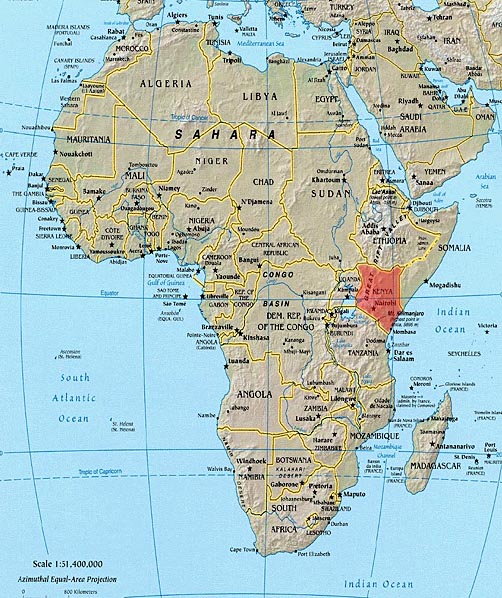
So that you will know a little bit more about where we will be traveling to do this volunteer work for AIDS orphans, I decided to post an entry about the country of Kenya and its people. Kenya is located in the Eastern part of Africa and in the part of the continent referred to as Sub Saharan since it is below the Sahara Desert. As you can see, part of the country is on the coast by the Indian Ocean and the country itself lies on the Equator. Although there are rainy and dry seasons, most of the time the temperature in Kenya is similar to warmest part of our summer. Nairobi, the capital city, is the largest city in East Africa and the orphanage where we will volunteering is located just outside of Nairobi in Karen. In the movie “Out of Africa” Karen Blixen moved to Kenya in 1913, to have a coffee plantation and befriend the local Kikuyu tribe; she later became a famous writer including her writing of the book which became the movie by the same title. The town of Karen is named after her.
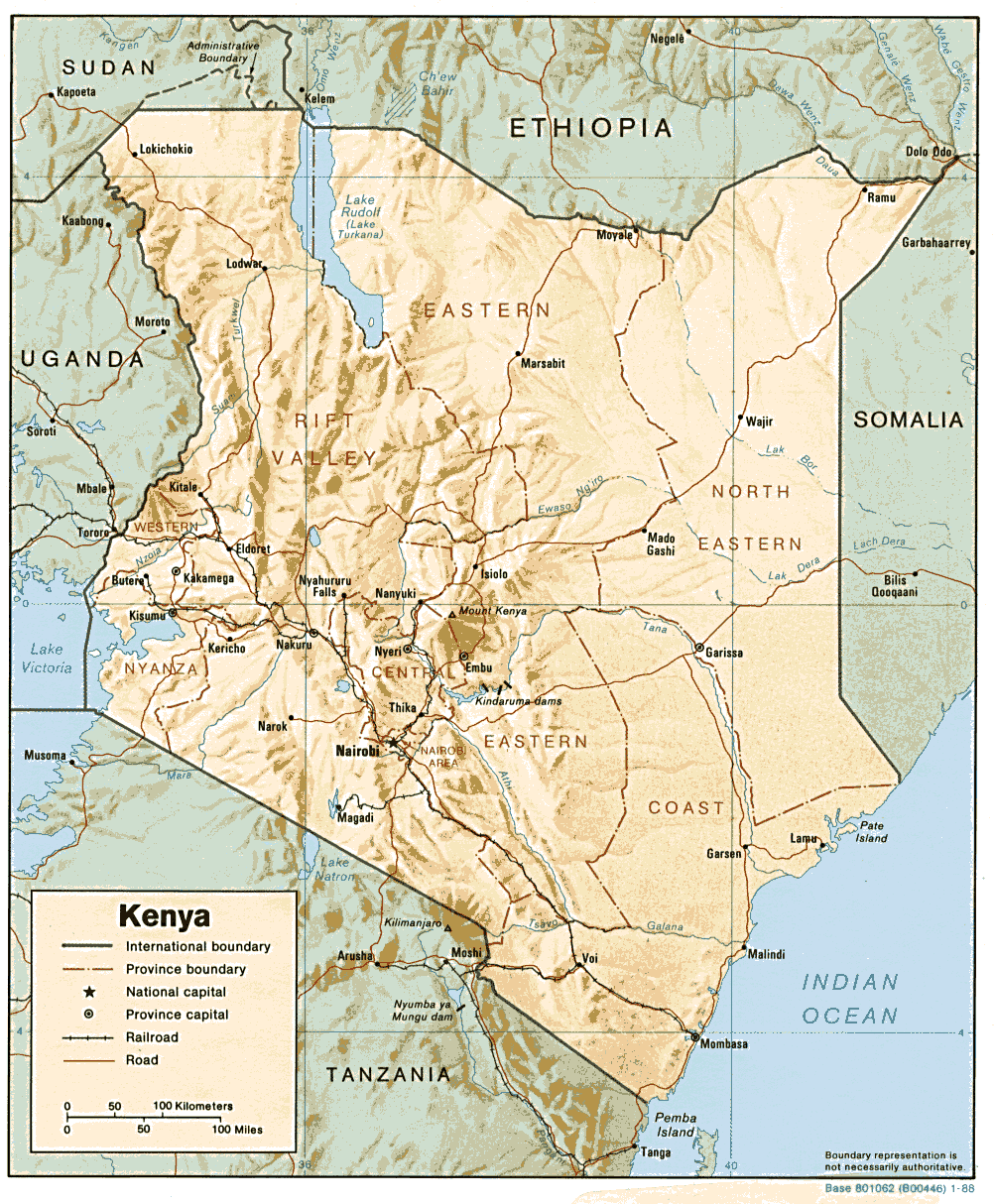
Kenya has more than 70 different ethnic communities or tribes and 80 different dialects. Although the official language of the country is English, the national language is Swahili. Because there are so many different communities in the country the national motto is “Harambee” which is Swahili for “Let’s all pull together.” It’s likely that you are familiar with some other Swahili words if you have ever seen the Disney movie “The Lion King”. A number of swahili words were used in that movie, like “Simba” meaning “lion”, “Rafiki” meaning “friend”, and “Hakuna matata” which means “no worries.” Children are taught English in school, but most are able to speak Swahili or another tribal language. The most well known of the Kenyan tribes are the Maasai, a nomadic tribe whose cattle are highly valued. They are striking to see because they are tall, lean and dress in red “shuka” (blankets) with elaborate beads and braided hair. At the end of our trip, we will have the opportunity to visit a Maasai village. The Kikuyu are the largest tribe in Kenya and live in the area around Mount Kenya, the 2nd highest mountain in Africa.
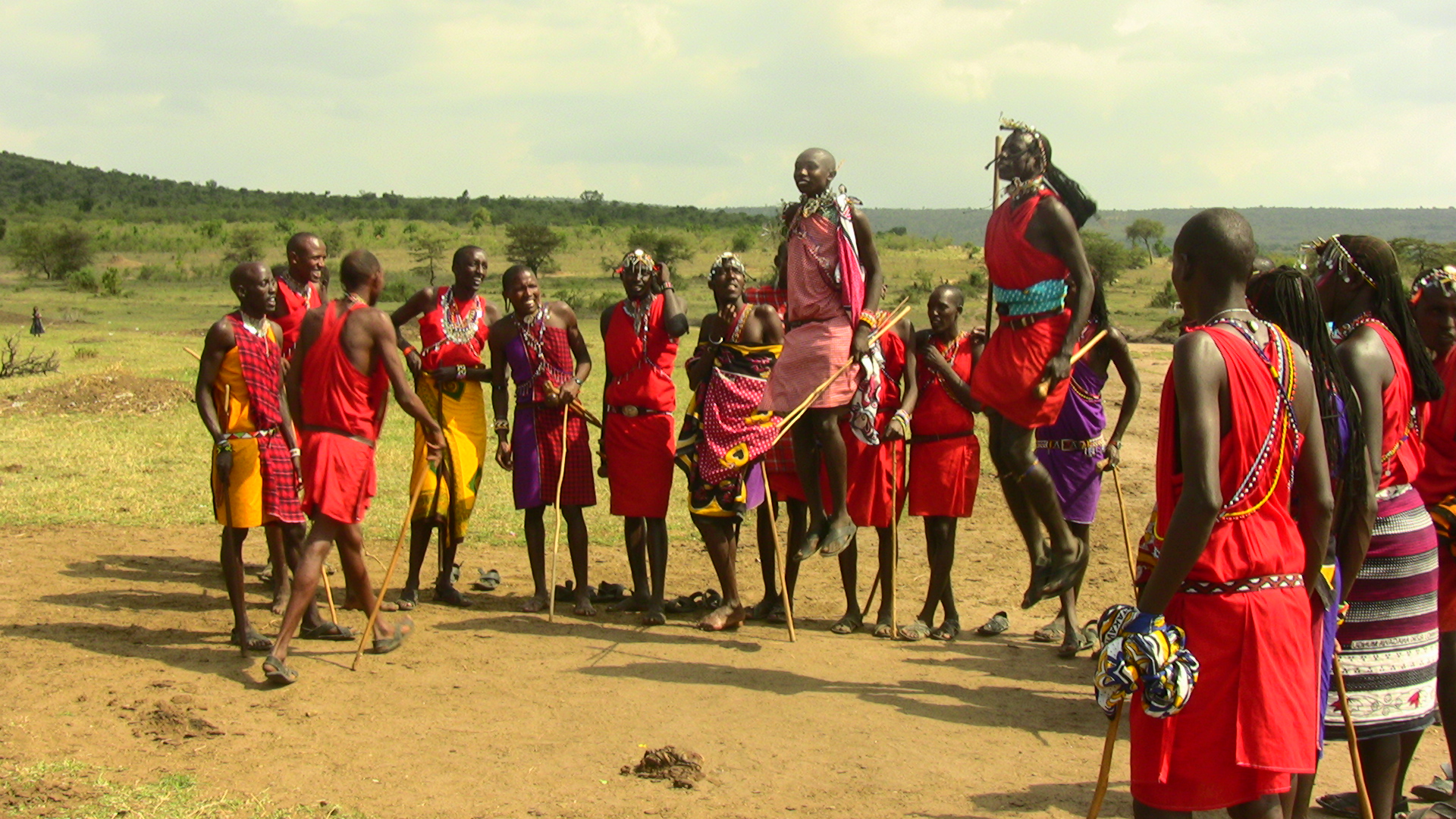
Maasai in a famous leaping ritual
Our earliest ancestors, Homo erectus, which evolved eventually into Homa sapiens, first inhabited the area around Lake Turkana in Kenya where their fossils were first discovered by the Leaky family.
Music, with both dancing and singing, are an important part of the Kenyan culture not just for entertainment, but more importantly for ceremony and ritual. Soccer is a national pastime and the most popular sport from children to adults. However, Kenyan’s middle and long distance runners are amongst the best in the world. Most of Kenya’s top long distance runners come from one tribe, the Kalenjin, and they have been responsible for winning many gold medals for Kenya in the last decade.
One of the things that for which Kenya is most famous is its national parks and reserves where wildlife can roam free. It is there where people are able to go on safari (Swahili word for journey) to see the animals in their usual habitat. Some of the animals that one might expect to see include:
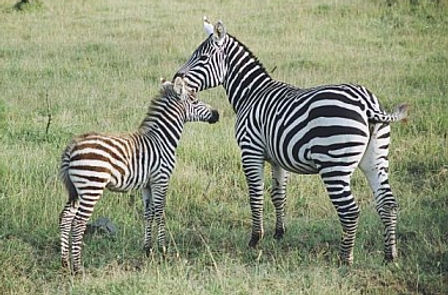
"Punda milia" zebras
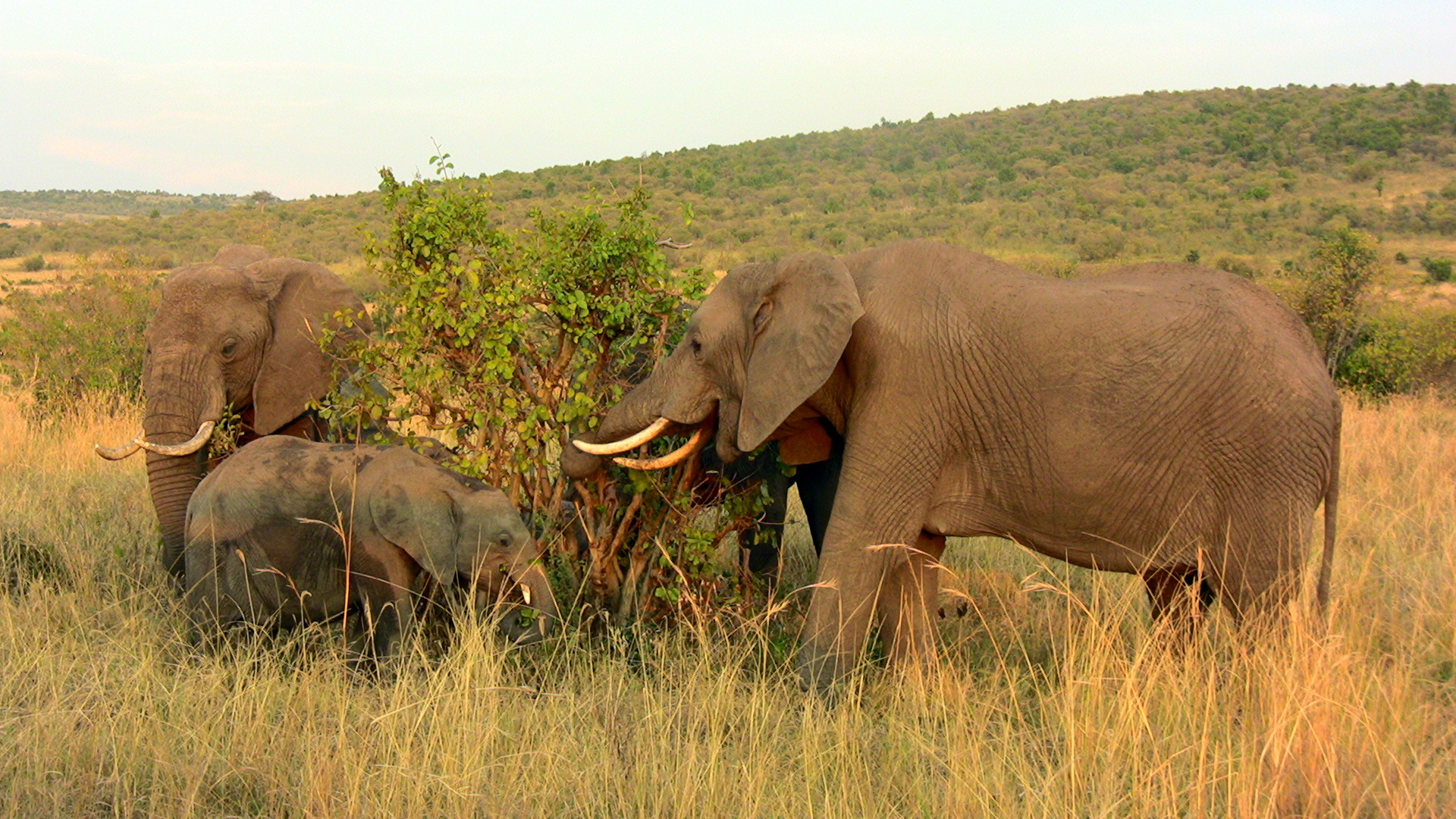
"Tembo" elephants
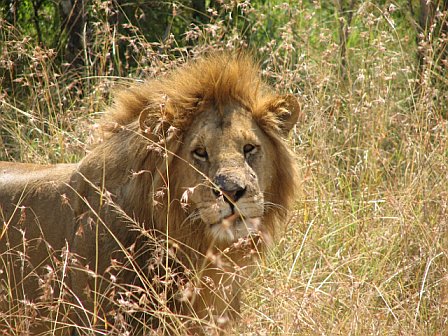
"Simba" lion
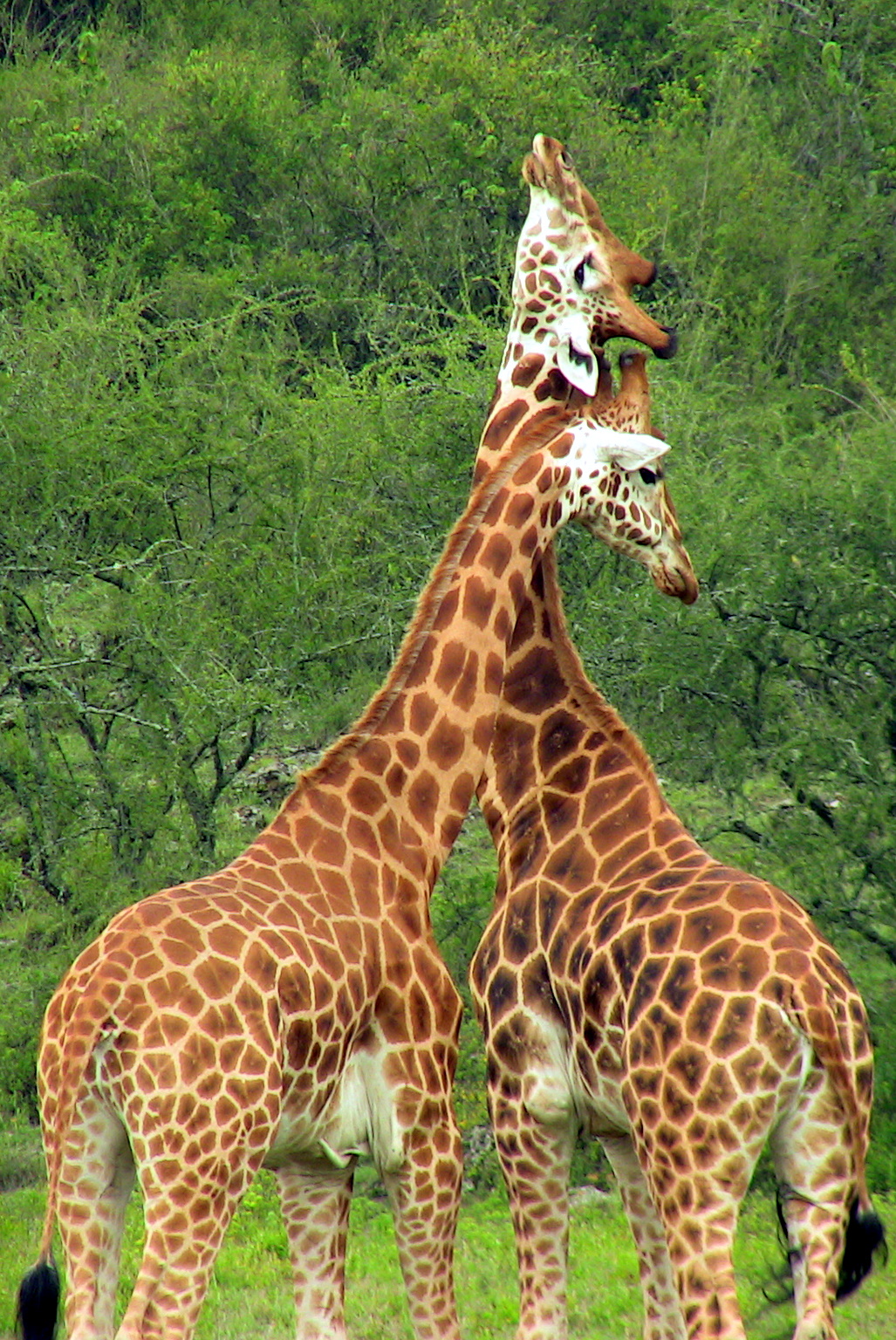
"Twiga" giraffes
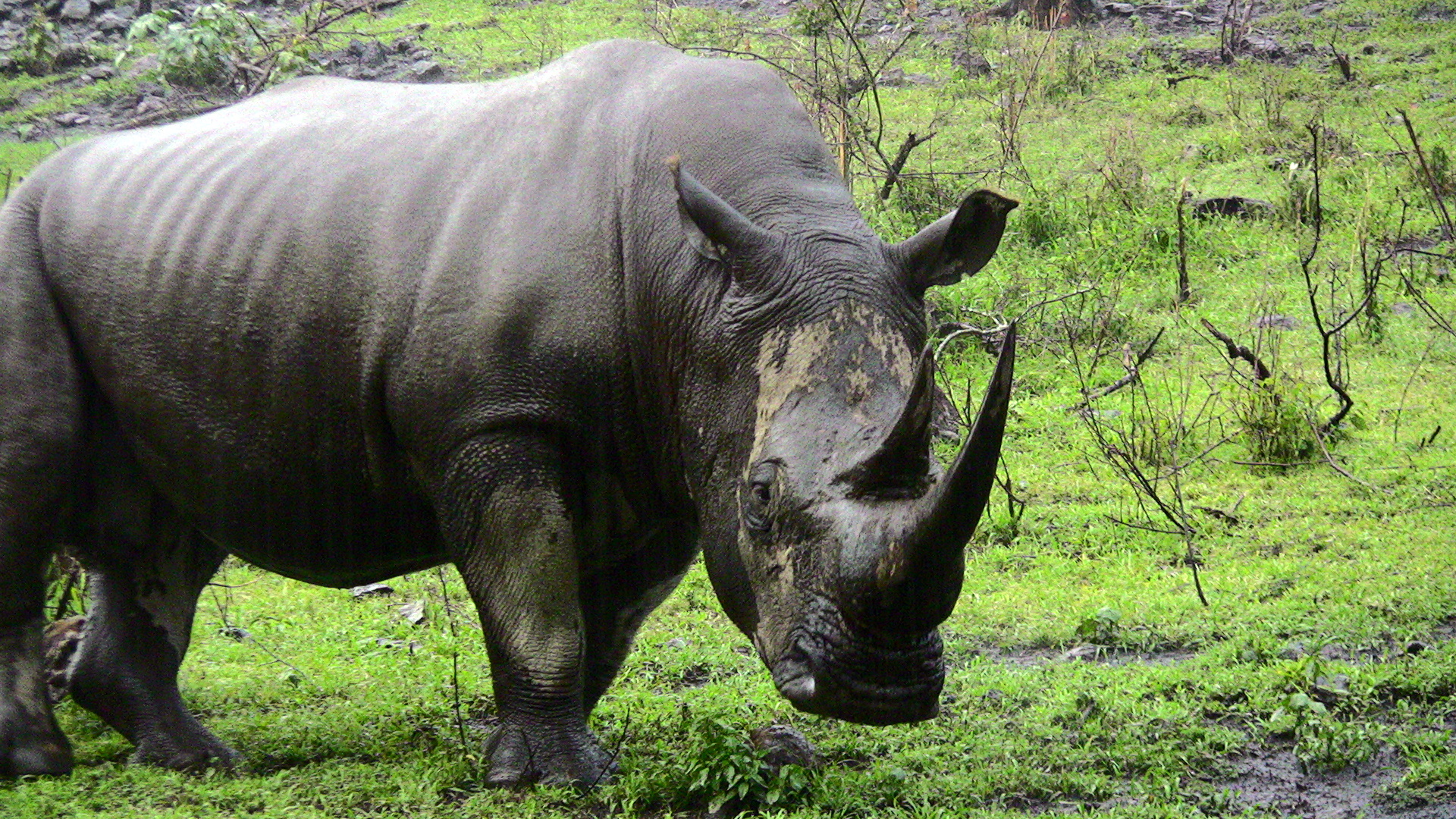
"Rhino" rhinocerous
The Maasai Mara is a national reserve that we will visit at the end of our trip and will go on safari. Between July and September each year, it is famous for being the site of the Great Wildebeest Migration. This involves about 2 million wildebeest, a half a million zebras , thousands of gazelles who migrate north from the Serengeti National Park in Tanzania to find new grazing land. They are followed by lions, leopards, hyenas and more, with the challenge being to cross the Mara River at the time of the highest water (full flood). I would love to return to Kenya during this time someday so that I could actually see this amazing spectacle (from an airplane!)
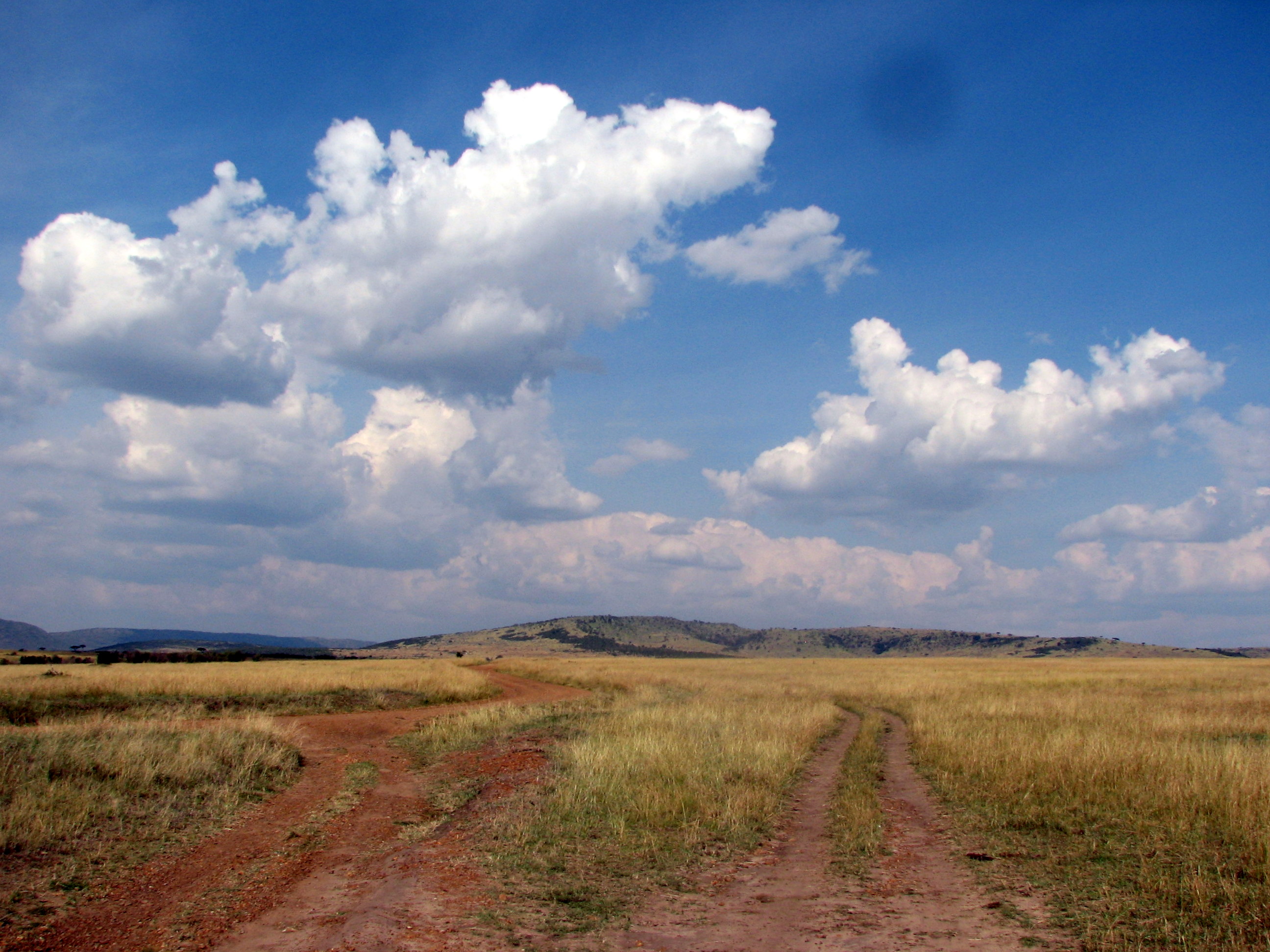
Beautiful Kenya countryside
All of the animal photos, the Maasai photo, and this one are from the KEST website and were taken by other people who went on similar service trips as the one we are taking and who also went on a safari and the end of their trip.
Art, Hats, Shirts and More
When we go to Kenya, we will each be bringing at least one 50 lb suitcase (aka “duffle”) full of donations—we are each allowed to bring two 50 lb suitcases with our airfare , so I suspect that we will be putting plenty of donated items in our other large suitcases as well.
Today I learned that Blick Art Materials (www.dickblick.com) approved my request for donations for the Kenyan Orphan Art Project/Maine Art Exchange! I am very grateful to Jen McCutcheon who presented my proposal and to the company for their generosity and willingness to donate the materials. So, my suitcase will also have art supplies and, of course, the art from the Maine students.
I am delighted to be “paying it forward” with many absolutely beautiful hand knit hats that were made for me when I was having chemotherapy. I almost hate to part with some of them because they are so lovely and were made with such care, but I also hope to never need them again. And in Kenya, despite what would seem like a warm climate to us, hats are worn often during the “colder” days. Since they were made for my small, then hairless head, they are perfect for children and it feels wonderful to pass them on where I know that every single one will be fully appreciated.
Tom has a rather large collection of running T-shirts from running or working at races over the years. He hopes to share these as part of his running project and is working on getting some running shoes as well. He has ideas and room for other things………
We have been thrilled that so many people who have talked with us about this trip have asked about donations. If you would like to donate, there are lists of needed items on the KEST website. There are many of the most basic things that are needed. Some are things that may just be “hanging around” our houses and no longer being used. A few are things that need to purchased, but are relatively inexpensive. The links to the lists are below:
http://www.k-e-s-t.com/pretrip/LT.pdf
http://www.k-e-s-t.com/pretrip/index3.html
Though we would love to fill many, many suitcases, we are somewhat limited with space and will have a challenge if everyone chooses the bulkiest and heaviest items. But…..we’ll figure it out. We won’t turn away any donations.
I will also surely find a way to create some art for sale (maybe cards from scans of the childrens’ artwork, next year’s photo calendar, photographs, not sure yet) ……. with proceeds going to Nyumbani. So there will be an opportunity there as well.
And finally, I wasn’t sure I would say this because it seems uncomfortably awkward to me, but then I thought I should tolerate that because this is about these kids and their tremendous need and not what makes me comfortable. So we are not asking for this as donations are usually brought in material form, but if anyone feels compelled to make a monetary donation to Nyumbani ( www.nyambani.org ) we won’t discourage that….. and it would be very easy to carry.
For The Students: World AIDs Day
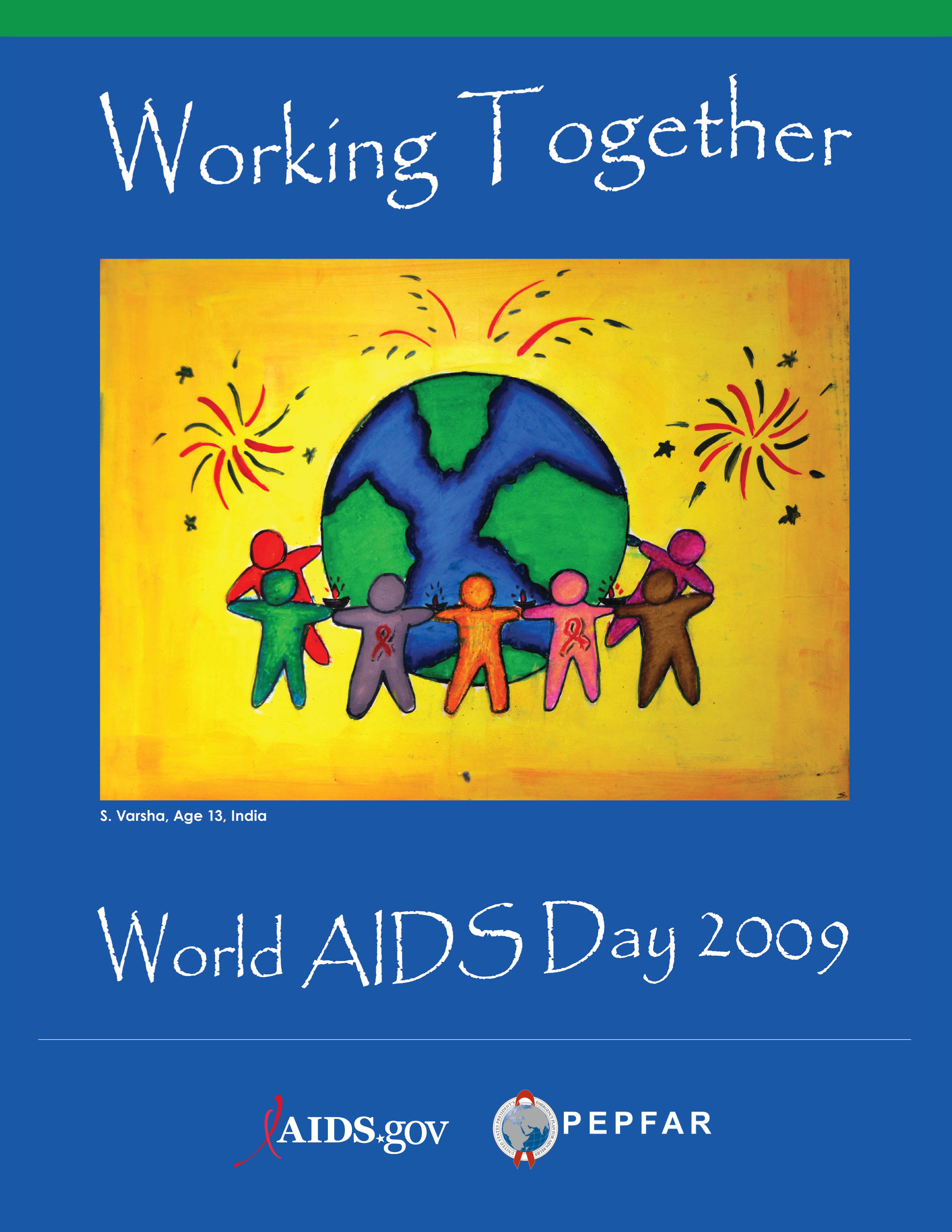
Today (December 1st) is World AIDS day which is a day to stop and think about people who have the AIDS disease here and all over the world. AIDS is a disease that is caused by a virus called HIV, like chicken pox or the flu, but there is no vaccination and it is much more serious and eventually deadly if it is not treated. AIDs is passed from person to person by only very special close contact or by a mother who is infected passing it to her baby when she is pregnant or nursing. It can’t be passed by hugging or sneezing or coughing, so it can’t be prevented by good handwashing or the things you think about for not passing illnesses. We do know a lot about how to prevent and treat AIDS with medicines, but the ways of doing this are not available in the poorer parts of the world where most people who get AIDS end up dying. That is why there are so many orphans in Africa that need our help. The symbol for World AIDS day is the red ribbon so you may see them worn today and President Obama will have a huge one hanging on the front of the White House.
World AIDS Day
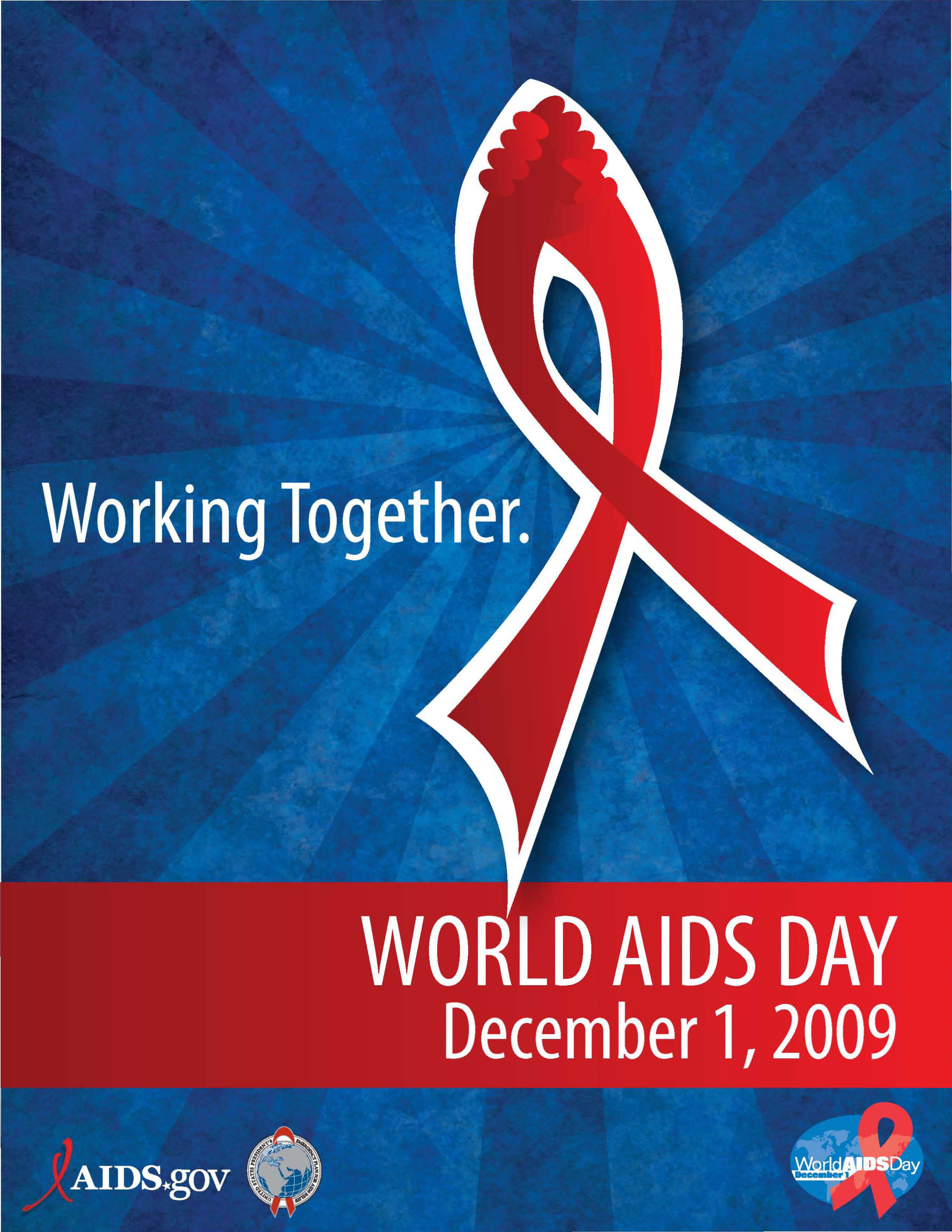 World AIDS Day was first established by the World Health Organization in 1988 and takes place annually on December 1st. I decided at some point that I would post an entry that would be educational about AIDS, especially the impact on children in Sub Saharan Africa and decided posting it today would be particularly fitting. The symbol for World AIDS day is the red ribbon, a large one of which hangs on the White House in Washington today. This day is a time for governments, organizations, and communities to come together and reevaluate and recommit to the needs of people with AIDs worldwide. The United States has a program, PEPFAR, the Presidents Emergency Plan for AIDS Relief launched in 2003, the largest commitment ever by a single nation toward an international health initiative — a comprehensive approach to combating HIV/AIDS around the world. UNAIDS is a joint United Nations program to address the AIDS epidemic. Despite this and many other programs, the AIDS epidemic has continued to grow and millions have died.
Since the AIDS epidemic first began in 1981, over 25 million people have died of AIDS. Today over 33 million people are living with HIV/AIDS and 2/3 of those people live in Sub Saharan Africa. AIDS, a disease that weakens the body’s immune system, is caused by HIV, a virus that can be transmitted sexually, through blood products, in utero and through breast milk. Although there are certain high risk groups, the overwhelming majority of transmission of the virus is through heterosexual contact. There is no cure for AIDS and unlike many other viruses, there is no vaccine for HIV. There is much known about how to prevent and treat AIDS. Averting sexual transmission involves encouraging safer sexual behavior including delayed first sex, partner reduction and condom use. The spread of HIV through drug injections can be slowed by outreach work, needle exchange and drug substitution treatment. Mother-to-child transmission can be almost eliminated through use of medication and avoidance of breastfeeding through the substitution of formula. Treatment with antiretroviral drugs (ARVS) for people who have the HIV virus can help them to stay healthy and live productively for many years. However, only a very small minority of people have access to the necessary education, prevention tools and the necessary treatment.
In 2007, 1 in 7 of the 2.9 million people who died of AIDS was a child. About 95% of the 13 million children who have been orphaned because of AIDS live in Africa. By 2010 it is expected that one third of all African children will be orphaned. As you can see, this set of facts of figures is staggering. But the numbers only begin to convey the magnitude of the problem by identifying who has died or is orphaned, without really conveying the scale of the individual suffering of child who has been orphaned because of AIDs.
Prior to becoming orphaned a child has been living with an increasingly ill parent and often has been caring for that parent. They have begun to suffer neglect and had to take over adult responsibilities like caring for siblings and contributing financially to the household. Many have had to drop out of school. They may continue to live with the surviving parent, but often that parent eventually becomes ill and dies as well. At the time of dealing with their grief over losing their parents they are also left without anyone to care for their basic needs and are burdened with the shame of the stigma that comes with having AIDS in the family.
You can see the video update on AIDS by Keven DeCock, The CDC Director for AIDS in Kenya on CNN News here: http://www.cnn.com/video/#/video/world/2009/11/25/impact.kevin.decock.cnn
Or learn more about HIV and AIDS in Africa here: http://www.avert.org/aids-hiv-africa.htm
 Lynn Ouellette
 Watoto Wote Wazuri
leave a comment